

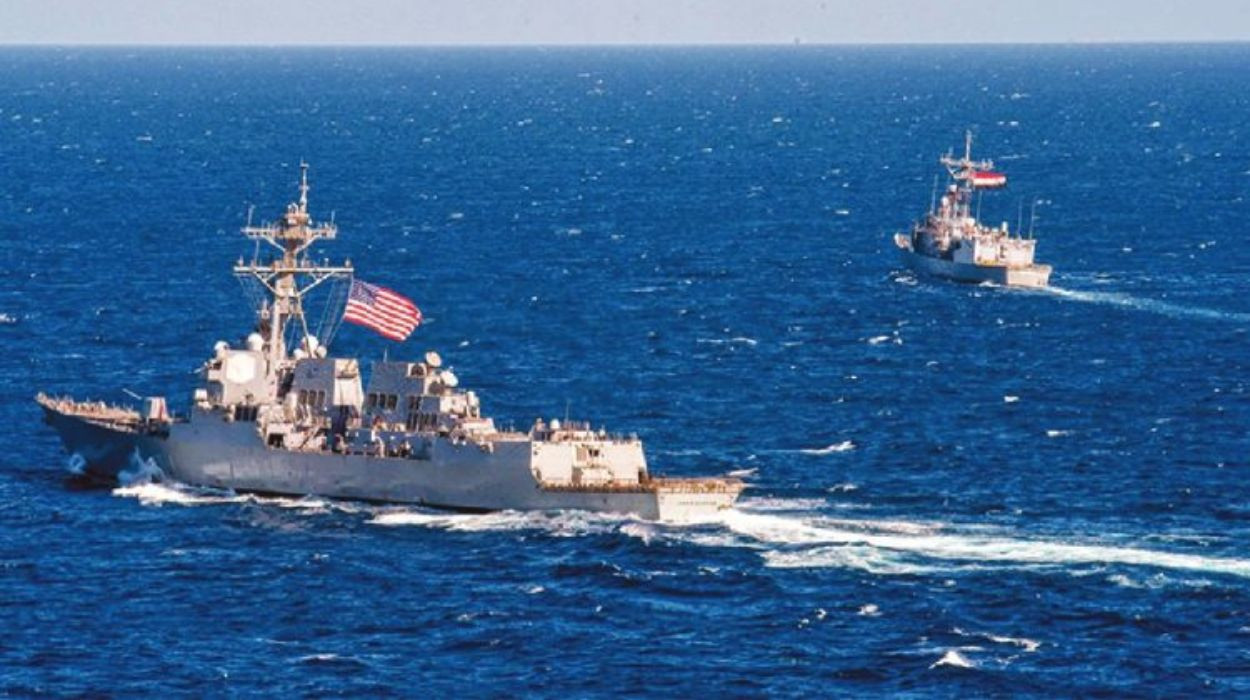
The US boat strikes campaign, initiated in early September 2025 under President Donald Trump, represents a bold evolution in American State Policy aimed at curbing drug trafficking in the eastern Pacific Ocean and Caribbean Sea. Overseen by US Southern Command (SOUTHCOM) through Joint Task Force Southern Spear, these operations have escalated dramatically, resulting in at least 183 to 190 deaths by May 2026, including the latest lethal kinetic strike on May 8 that killed two alleged "narco-terrorists" on a vessel transiting known trafficking routes.
This State Policy of precision drone and missile engagements, directed by Gen. Francis L. Donovan, prioritizes disrupting cartel logistics with intelligence-driven action, releasing video footage to showcase no harm to US personnel while one survivor prompted Coast Guard rescue efforts. Amid rising fentanyl threats to US borders, the campaign underscores a Trump-era shift toward proactive maritime interdiction, yet it has sparked intense debate over Human Rights implications in international waters.
Origins in the Trump Era
From its inception shortly after Trump's January 2025 inauguration, the US boat strikes embodied a muscular State Policy response to surging narco-submersibles and speedboats operated by Latin American syndicates. Defense Secretary Pete Hegseth authorized the first strikes on September 2, 2025, framing them as essential to national security against illicit narcotics flows. Early operations, like the December 4, 2025, incident where
"Four male narco-terrorists aboard the vessel were killed,"
as stated by SOUTHCOM, established a pattern of rapid kinetic action with unclassified videos affirming success. By late 2025, over 22 missions had unfolded, branding targets as operatives of "Designated Terrorist Organizations" without public evidence details, aligning with Trump's rhetoric of preemptive force dubbed a "love tap" against cartels.
Into 2026, the tempo accelerated, with the January 23 strike killing two and leaving one survivor, as intelligence
"confirmed the vessel was navigating along recognized drug trafficking routes in the eastern Pacific and was participating in narcotics operations,"
per SOUTHCOM's release. This State Policy persistence reflected broader geopolitical tensions, positioning US boat strikes as a hemispheric bulwark, even as cumulative fatalities climbed toward 125 by early year, raising early questions about transparency and proportionality in stateless seas.
Escalation and Key Statistics
The US boat strikes have surged past 30 missions since September 2025, with death tolls documented at 170 by mid-April (per Al Jazeera reports), 183 by late April, and nearing 190 by early May 2026 amid clustered lethality. Notable escalations include April 13 (five killed), April 24 (two killed), and May 5 (three killed), culminating in the May 8 operation where
"On May 8, at the direction of #SOUTHCOM commander Gen. Francis...,"
the command executed a flawless strike, neutralizing threats without US casualties. These figures highlight the campaign's intensity, building on SOUTHCOM's counter-narcotics framework since 2020 but amplifying it with lethal precision that has claimed mostly unnamed "male narco-terrorists." Survivor patterns—one in May 8, others in prior strikes—underscore operational mercy alongside opacity, as no wreckage or independent verification accompanies official claims.
This statistical escalation embeds Human Rights concerns within the State Policy narrative, where over 34 deaths by October 2025 ballooned rapidly, prompting scrutiny of due process in high-seas engagements. Conservative outlets like Fox News hailed the May 8 kills as vital border defense, yet the lack of trials or shared intelligence fuels perceptions of unilateral vigilantism.
US Military Justifications
Central to the State Policy, SOUTHCOM positions US boat strikes as lawful self-defense under UNCLOS, targeting armed vessels on narco-routes as imminent threats. Releases emphasize precision, with the May 8 footage exemplifying disruption of cartel supply lines tied to sanctioned groups. Pentagon rhetoric reinforces this, labeling operators "narco-terrorists" to justify preemptive action in international waters, aligning with Trump-era priorities amid domestic opioid crises. No error admissions surface, even with survivors aided by Coast Guard, framing the policy as flawlessly executed national security.
Mounting Global Backlash
Global reaction has cast US boat strikes as a State Policy overreach, with the UN High Commissioner for Human Rights condemning them in October 2025 as
"extrajudicial executions"
breaching international law, citing over 60 deaths at that point and demanding probes. By April 2026, reports tallied 170 fatalities, amplifying calls to halt operations lacking accountability, likening them to controversial drone campaigns elsewhere. Human Rights advocates highlight civilian risks and evidence gaps, straining hemispheric relations off Latin American coasts where US assets operate with allies.
Legal and Ethical Fault Lines
Legally, US boat strikes invoke Article 51 self-defense, but critics via UN channels argue peacetime killings violate ICCPR without imminent threats, challenging the State Policy foundation. Ethically, the 190-death toll versus implied tons seized sparks proportionality debates, with survivor leniency contrasting "terrorist" labels. Trump-era hardening post-inauguration accelerated strikes amid 2026 crises, yet backlash risks diplomatic isolation echoing past unilateral moves.
Strategic Implications Ahead
Looking forward, US boat strikes as entrenched State Policy face heightened UN and OAS scrutiny, potential cartel countermeasures like armed escorts, and classified success metrics on interdictions. Balancing security gains with Human Rights imperatives remains critical; the May 8 strike—two down, campaign unbroken—epitomizes the ongoing tension between American resolve and international reproach.