

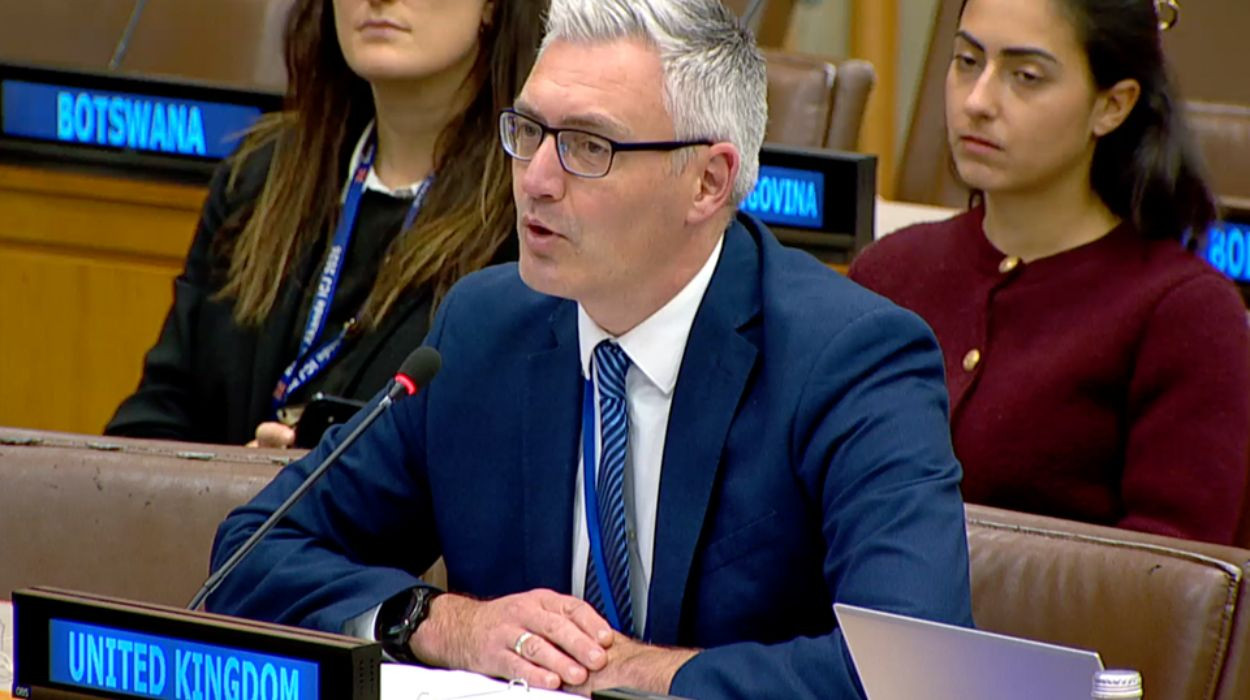
In a recent statement delivered at the United Nations Third Committee, David Smith, the UK Special Envoy for Freedom of Religion or Belief (FoRB), reaffirmed the UK's unwavering commitment to embedding the right to FoRB at the core of its human rights approach.
“The right to FoRB sits at the heart of the UK's human rights approach,”
Smith emphasized, underlining how this right is indispensable for fostering open, stable, and prosperous societies that can effectively address global challenges such as conflict, economic growth, and migration.
Linking FoRB to Broader Societal Challenges
Smith acknowledged the interplay between FoRB and pressing global issues. He praised the Special Rapporteur’s report detailing FoRB’s significance for people on the move and highlighted how violations of this right contribute to displacement and migration across borders.
“We must do more to address the root causes of displacement and migration, including violations and abuses of FoRB,”
he said. This integration showcases the UK’s holistic view of human rights as intrinsically interconnected, where protecting freedom of belief is both a moral imperative and a practical necessity for global stability.
UK’s Commitment to Practical Support and Humanitarian Aid
To translate commitment into action, Smith outlined specific UK responses to crises where FoRB violations are acute. For example, the UK is heavily engaged in Sudan, reinforcing peace efforts, providing humanitarian aid, and helping displaced people. This year alone, the UK committed an additional £120 million to aid those affected by the world's largest humanitarian and displacement crisis. Smith noted,
“Our aid will assist those living through the world’s biggest humanitarian and displacement crisis and help people remain within their immediate region, ensuring they can return home more easily when conditions permit.”
Addressing Torture and Religious Persecution
A consistent theme in UK statements concerning FoRB is the firm condemnation of torture and persecution linked to religious or belief identity. Drawing on a recent report from the Special Rapporteur on FoRB and torture, Smith highlighted deeply disturbing accounts of detainees in Myanmar and Sudan being denied religious rights or coerced to abandon their beliefs. He restated the UK’s unreserved condemnation of torture and called for concerted global action:
“We must collectively do more to address and prevent torture and ensure the fundamental right to freedom of religion or belief is protected.”
Strategic Approach: UK Government’s FoRB Strategy
The UK government launched a comprehensive Freedom of Religion or Belief Strategy earlier in 2025, aimed at prioritizing ten countries where FoRB violations are greatest, including Afghanistan, Algeria, China, India, Iraq, Nigeria, Pakistan, Syria, Ukraine, and Vietnam. Smith’s vision is clear:
“We must mainstream FoRB into the UK’s foreign policy. This means a proactive approach that works with countries and challenges practices which repress religious communities.”
The strategy calls for a whole-of-government approach where diplomacy, trade, development, and security policies all reinforce protections for FoRB. Smith said,
“Ensuring FoRB is integrated into our diplomacy, development work, and trade relationships is essential.”
The strategy also highlights the importance of working closely with civil society, faith actors, and human rights advocates to maximize impact.
Voices from Civil Society and Government Endorsing FoRB
The strategic approach received positive reactions from various quarters. Chibuzor Tina Amadi, Parliamentary Liaison Officer for Christian Solidarity Worldwide (CSW), welcomed the targeted country approach, emphasizing that FoRB should be a lens through which all UK foreign engagements are viewed. She said,
“In regions where violations are most acute, the UK must use every possible lever to ensure the right to freedom of religion or belief is respected, protected, and promoted as a matter of urgency.”
Additionally, Human Rights Minister Lord Collins of Highbury remarked,
“The right to freedom of religion or belief sits at the heart of our human rights approach and is central to the UK’s foreign policy… This is about standing up for people who face discrimination, harassment, or even violence, simply for what they do, or do not, believe.”
FoRB as a Tool for Peace and Prosperity
The UK’s position reflects a broader international understanding that religious freedom is a cornerstone of peaceful and prosperous societies. Smith’s statement stresses that societies respecting FoRB tend to be more secure and stable, making it a key factor in addressing issues ranging from internal conflict to economic development and migration.
The UK’s Leadership in Promoting FoRB Globally
The UK’s consistent, strategic advocacy for Freedom of Religion or Belief at the United Nations and through its foreign policy initiatives demonstrates a strong leadership role in advancing this fundamental human right. Through targeted strategies, humanitarian aid, and diplomatic engagement, the UK commits to protecting vulnerable populations and fostering global stability rooted in respect for FoRB.
By drawing on reports from Special Rapporteurs and engaging civil society voices, the UK’s holistic approach integrates FoRB within broader human rights and governance frameworks. This robust effort is critical, not only for the dignity and rights of individuals worldwide but also for the collective security and prosperity of nations.