

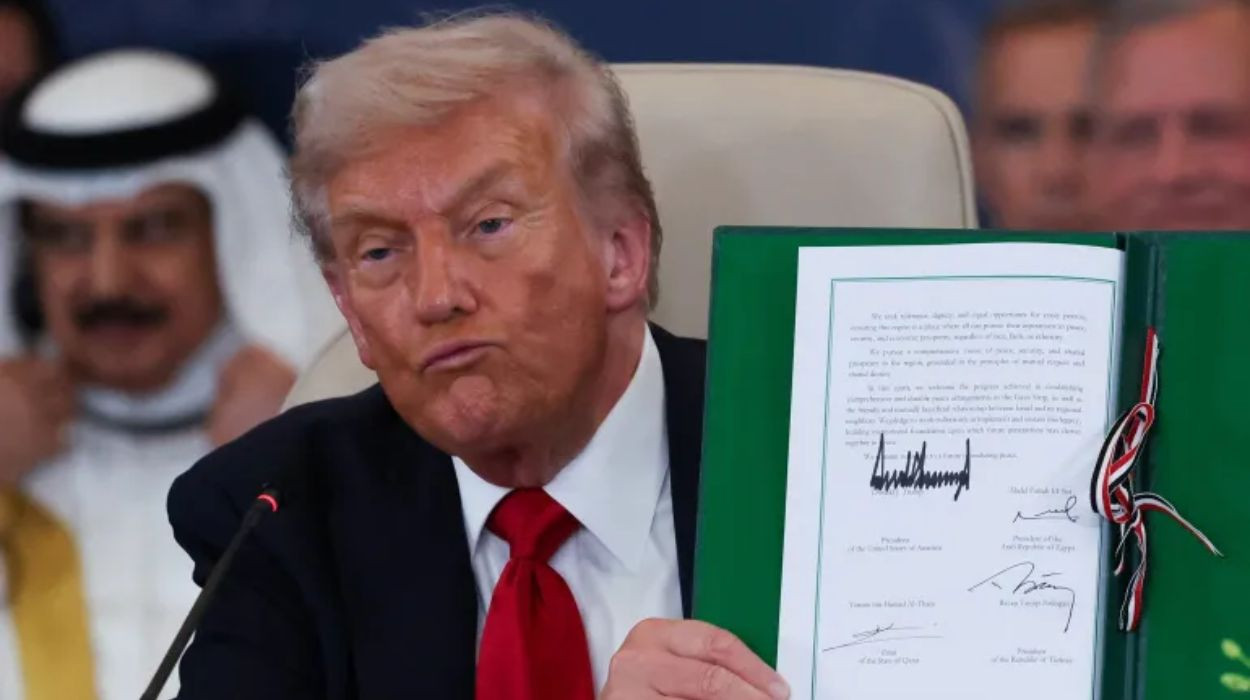
The recent escalation of violence within Gaza, involving clashes between Hamas and armed clan groups, has drawn sharp warnings from U.S. President Donald Trump, who threatened to “go in and kill” Hamas if the internal violence continues. This forceful rhetoric signals a pivotal moment in the fragile Gaza ceasefire following a two-year war, impacting the geopolitical landscape of the Middle East. This analysis integrates all relevant information, statistics, statements, and positions of key stakeholders involved, providing a nuanced understanding of the situation, while exploring the implications for peace efforts and regional stability.
Gaza’s Internal Clashes and Trump’s Warning
A surge in violent confrontations between Hamas security forces and extremist clan members, particularly the Dughmush clan, has claimed at least 27 lives, including both Hamas fighters and opposition gunmen. Hamas justifies the crackdown as an effort to curb gang-related violence, corruption, and collaboration with Israeli intelligence, which has long destabilized Gaza internally. The Gaza Interior Ministry went further by offering a blanket amnesty to clan members not involved in recent fighting, perhaps to reduce tensions.
In stark response, President Trump raised the stakes with a threat on social media:
“If Hamas keeps killing individuals in Gaza, we will intervene and eliminate them,”
signaling a potential U.S.-backed operation should Hamas fail to cease the bloodshed. However, Trump clarified the U.S. military would not be the direct actor, saying,
“It's not going to be us … There are people very close, very nearby, that will go in, and they'll do the trick very easily, but under our auspices”.
Initially, Trump had appeared less concerned about Hamas' internal crackdowns, stating,
“That didn’t bother me much… That’s acceptable,”
but his tone shifted as violence escalated and worries grew about the ceasefire's stability.
The Demand for Disarmament and Hamas’ Firm Stance
Trump has made clear his calls for Hamas to disarm, warning that if Hamas does not “disarm voluntarily, or else the U.S. will disarm them ‘quickly and perhaps violently’”. This demand aligns with his broader peace plan—outlined in a 20-point proposal approved in its initial phase by both Israel and Hamas—which envisions a durable, albeit fragile, ceasefire predicated on Hamas relinquishing its arms.
Hamas, however, categorically denies any intent to disarm and frames its weapons as a “national and legal right” to resist Israeli occupation. The group views disarmament as unacceptable without a political guarantee of Palestinian rights and sovereignty. Public executions of alleged collaborators and gang members by Hamas, which have been documented and condemned by human rights organizations, illustrate its determination to maintain control and authority within Gaza by force if necessary. As one report states, Hamas "considers its arms the legitimate means to resist Israeli occupation until Palestinians regain full rights".
The Humanitarian and Security Impact of Gaza’s Internal Violence
The internal toll of Gaza’s violence extends beyond fatalities. Reports indicate that Hamas forces detained numerous Palestinians opposed to its authority in a clampdown on dissent, risking further destabilization. Meanwhile, interference in humanitarian aid distribution by armed gangs has worsened the crisis, with many Palestinians remaining trapped without food, medicine, and essential supplies due to the ongoing Israeli blockade and factional clashes.
Israeli authorities, for their part, are reported to have supported certain armed groups in Gaza—including some with extremist links—to weaken Hamas's control. These prior interventions complicate the conflict dynamics and spotlight the fragility of the power balance inside Gaza.
International Reactions and Analytical Perspectives
Across the international community, reactions to Trump's statement and the Gaza violence have been mixed. While some praise Trump for pressing hard on Hamas to cease hostilities, others warn that forceful disarmament without credible political resolutions risks a relapse into chaos.
Human rights agencies like the Al Mezan Centre and the Palestinian Independent Commission stress that Hamas’ extrajudicial killings violate fundamental laws and inflict harm on civilians already suffering in Gaza.
Meanwhile, political analysts emphasize that as long as Hamas remains the main security provider in Gaza, prospects for reconstruction and long-term peace are dim. CNN analyst Brett McGurk highlights that while Hamas no longer threatens Israel significantly under the new ceasefire terms, it continues to pose a severe threat to Palestinians through oppressive governance and internal violence. According to McGurk, the new arrangement effectively divides Gaza, with half under Israeli control and half remaining under Hamas, pending an international security force's arrival to replace Israeli troops.
Broader Context: Trump’s Gaza Peace Plan and Policy Challenges
Trump's peace proposal, approved in principle by both Israel and Hamas, represents a significant, yet contentious, diplomatic move aimed at ending over two years of war. It focuses on securing a ceasefire, releasing hostages, and stabilizing Gaza’s governance structure. However, Trump's plan notably sidesteps the traditional two-state solution favored by past U.S. administrations and many global leaders, replacing it with a pathway towards what he terms a “credible pathway to Palestinian self-determination” without explicit guarantees or detailed mechanisms.
As Professor Nader Hashemi from Georgetown University notes, the plan marginalizes Palestinian voices and reflects primarily Israeli and Arab autocrat interests, casting doubt on its viability as a comprehensive peace framework.
Trump’s fluctuating messaging—from endorsing Hamas actions against gangs to threatening military intervention—reflects the complexities and contradictions in balancing peace enforcement with power realities on the ground.
The Fragile Future of Gaza
The resurgence of internal violence in Gaza and Trump's hardline response expose the precariousness of the region's fragile ceasefire and the broader peace process. Trump’s threat to “kill” Hamas if the group does not disarm signals a willingness to escalate coercive measures, yet the lack of clear strategies beyond threats complicates prospects for sustainable peace.
Hamas’ refusal to disarm and continued crackdown on rivals underscore the difficulties in separating security and political legitimacy in Gaza. Meanwhile, humanitarian suffering persists with limited aid access and ongoing conflict fallout.
Ultimately, the future of Gaza rests on complex negotiations between multiple actors, including international mediators. The current violence and rhetoric highlight an urgent need for credible political solutions and effective governance structures to prevent further bloodshed and misery for Palestinians and Israelis alike.