

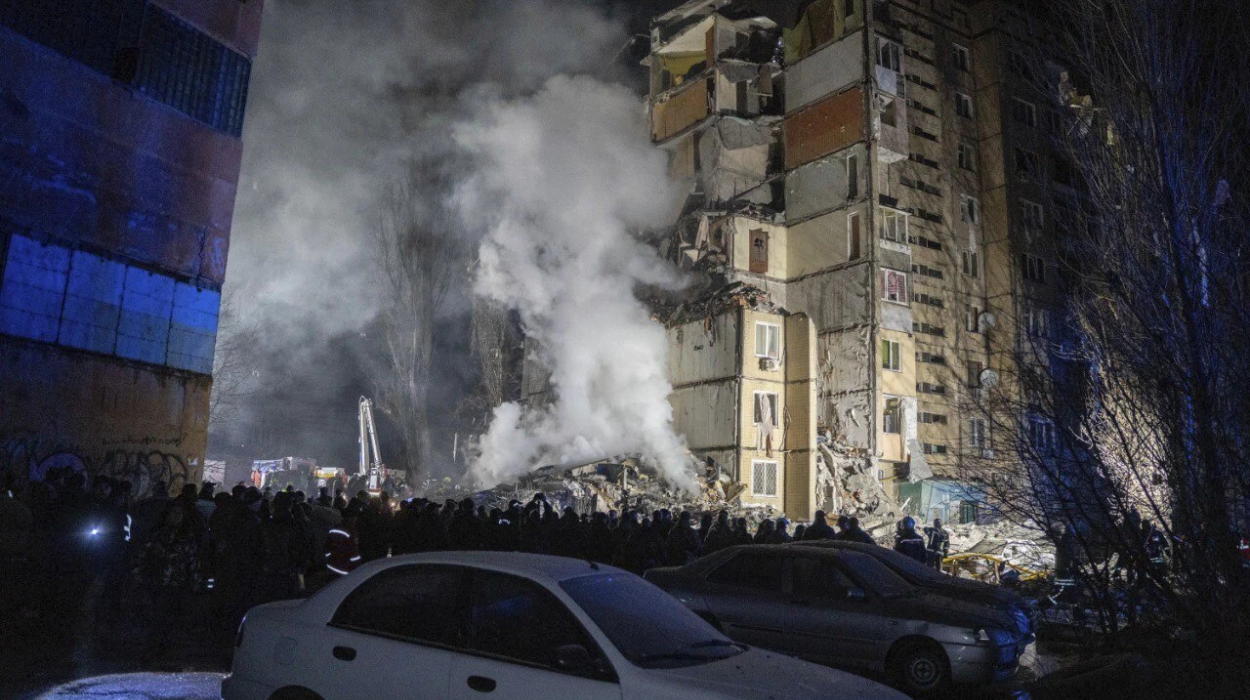
The overnight Russian drone attack on Odesa, Ukraine, on June 27–28, 2025, which killed two civilians and injured at least 14–17 others, including children, underscores the grave and ongoing violations of international humanitarian and human rights law in the context of the Ukraine conflict. As the war enters its fourth year, the increasing reliance on drone warfare has amplified the risks to civilians, devastated infrastructure, and deepened the humanitarian crisis. This analysis examines the Odesa attack and its broader implications through the lens of human rights, drawing on verified statistics, official statements, and international legal standards.
How did the Odesa attack unfold and who was affected?
In the early hours of June 28, 2025, a Russian drone struck a 21-story residential high-rise in Odesa, igniting fires on three floors and trapping residents in their apartments. Firefighters rescued at least five people, including a small child, while emergency teams battled flames and evacuated residents down dark stairwells amid ongoing air raid alarms. The attack killed a married couple and injured at least 14–17 people, including three children—one of whom was reported in critical condition.
The attack was part of a broader escalation, with Russian missile and drone strikes killing at least 10 people and injuring 50 across Ukraine that same night, targeting civilian infrastructure in multiple regions, including Dnipropetrovsk, Donetsk, and Kherson.
Are drone strikes targeting civilians a violation of human rights?
International humanitarian law (IHL), as codified in the Geneva Conventions, strictly prohibits the targeting of civilians and civilian objects during armed conflict. The UN Human Rights Monitoring Mission in Ukraine has documented a pattern of deliberate or indiscriminate drone strikes by Russian forces against civilians engaged in daily activities, such as driving, walking, or even evacuating others in marked ambulances. The Odesa attack, which struck a residential building and injured children, exemplifies these violations.
The UN report
“Deadly Drones: Civilians at Risk from Short-Range Drones in Frontline Areas of Ukraine”
highlights that 89% of drone strike casualties occurred in Ukrainian government-controlled territory, and that such attacks violate the principles of distinction and precaution under IHL, potentially constituting war crimes.
Beyond the immediate casualties, drone strikes have instilled widespread fear, disrupted daily life, and crippled access to essential services in affected communities. The trauma is compounded by the destruction of homes, displacement, and the persistent threat of renewed attacks. Odesa’s regional governor, Oleh Kiper, emphasized the toll on families:
“Our medics are doing everything possible to preserve each person's life and health”.
Mayor Hennadiy Trukhanov described the aftermath as
“destroyed homes, frightened children, human suffering -- these are the consequences of yet another enemy attack”.
What is the broader pattern of drone warfare in Ukraine?
Since February 2022, short-range drone attacks have killed at least 395 people and injured 2,635 in Ukraine, with over 3,000 civilian casualties documented by the UN between February 2022 and April 2025. The frequency and lethality of drone strikes have surged, with April 2025 marking the deadliest month on record: 42 civilians killed and 283 injured. Russian forces have increasingly used first-person-view (FPV) drones for targeted strikes, further endangering civilians.
Odesa, a port city of around one million people, has been a frequent target of Russian missile and drone attacks since the full-scale invasion. Recent weeks have seen a marked escalation, with multiple attacks on residential buildings, infrastructure, and the city’s main train station. On June 10, a similar attack killed two people and injured eight.
How are Ukrainian and international authorities responding?
Ukrainian emergency services have responded swiftly, rescuing trapped residents and providing urgent medical care to the wounded. Firefighters have risked their lives to battle blazes and evacuate civilians under dangerous conditions, as documented in footage shared by the State Emergency Service.
In parallel with the Odesa attack, Ukraine reported destroying Russian helicopters and an anti-aircraft missile system in occupied Crimea, highlighting the ongoing escalation and tit-for-tat nature of the conflict.
The UN and human rights organizations have repeatedly condemned the targeting of civilians and civilian infrastructure. The UN Human Rights Monitoring Mission asserts that such attacks
“violate international humanitarian law, particularly the principles of distinction and precaution, and may in some cases constitute war crimes”.
The international community continues to document, verify, and analyze evidence for potential future accountability.
What are the human rights implications for civilians?
The right to life, enshrined in the Universal Declaration of Human Rights and the International Covenant on Civil and Political Rights, is gravely threatened by the persistent targeting of civilian areas. The Odesa attack and similar strikes directly undermine this fundamental right.
The destruction of residential buildings leaves families homeless and vulnerable. Injuries to children and adults strain already overstretched medical services, while psychological trauma has long-term consequences for survivors, especially children.
The relentless nature of drone and missile attacks has created a climate of fear and insecurity, amounting to collective punishment of civilian populations. The disruption of daily life, loss of livelihoods, and forced displacement further violate basic human rights.
Are there patterns of escalation and impunity?
Media and UN reports confirm that Russian drone and missile attacks have intensified across Ukraine in May and June 2025, coinciding with stalled diplomatic efforts and a race to deploy increasingly sophisticated weaponry.
Despite mounting evidence, there is little indication that those responsible for ordering or carrying out attacks on civilians are being held to account. The UN has called for thorough investigations and prosecutions for war crimes, but systemic impunity persists.
What is the way forward for human rights protection?
All parties to the conflict must adhere to their obligations under international humanitarian and human rights law. This includes refraining from targeting civilians, ensuring proportionality in military operations, and allowing for effective humanitarian response.
Continued documentation and independent monitoring by the UN and human rights organizations are essential for future accountability. The international community must support efforts to collect evidence and prepare for potential prosecutions of war crimes.
Immediate support for affected civilians, including medical care, shelter, and psychosocial assistance, is critical. International actors should prioritize civilian protection and press for measures to mitigate the impact of ongoing hostilities.
Broader human rights crisis
The Russian drone strike on Odesa, which killed two civilians and injured at least 14–17 others, including children, is emblematic of a much broader human rights crisis facing Ukraine’s civilian population. Since the full-scale invasion began, Russian forces have repeatedly targeted residential areas, civilian infrastructure, and essential services, resulting in mounting civilian casualties and widespread trauma. According to the UN Human Rights Monitoring Mission, attacks with short-range drones alone have killed at least 395 civilians and injured 2,635 between February 2022 and April 2025, with the vast majority of casualties occurring in Ukrainian-controlled territory. In May 2025, at least 183 civilians were killed and 836 injured across 17 regions, continuing a devastating trend of high civilian casualties.
Human Rights Watch and other organizations have documented deliberate or reckless targeting of civilians, including the use of drones to strike people in their homes, cars, or even while evacuating in marked ambulances. Such attacks violate international humanitarian law, which prohibits targeting civilians and requires all parties to distinguish between military and civilian objects. The destruction of homes, schools, hospitals, and port infrastructure in Odesa and other cities not only causes immediate loss of life but also cripples access to essential services and instills lasting fear among the population.
As the war grinds on, the imperative to protect civilians and uphold human rights must remain central to the international response. The relentless civilian toll, destruction of infrastructure, and disruption of daily life in Ukraine demand urgent accountability and a renewed commitment to international law.