

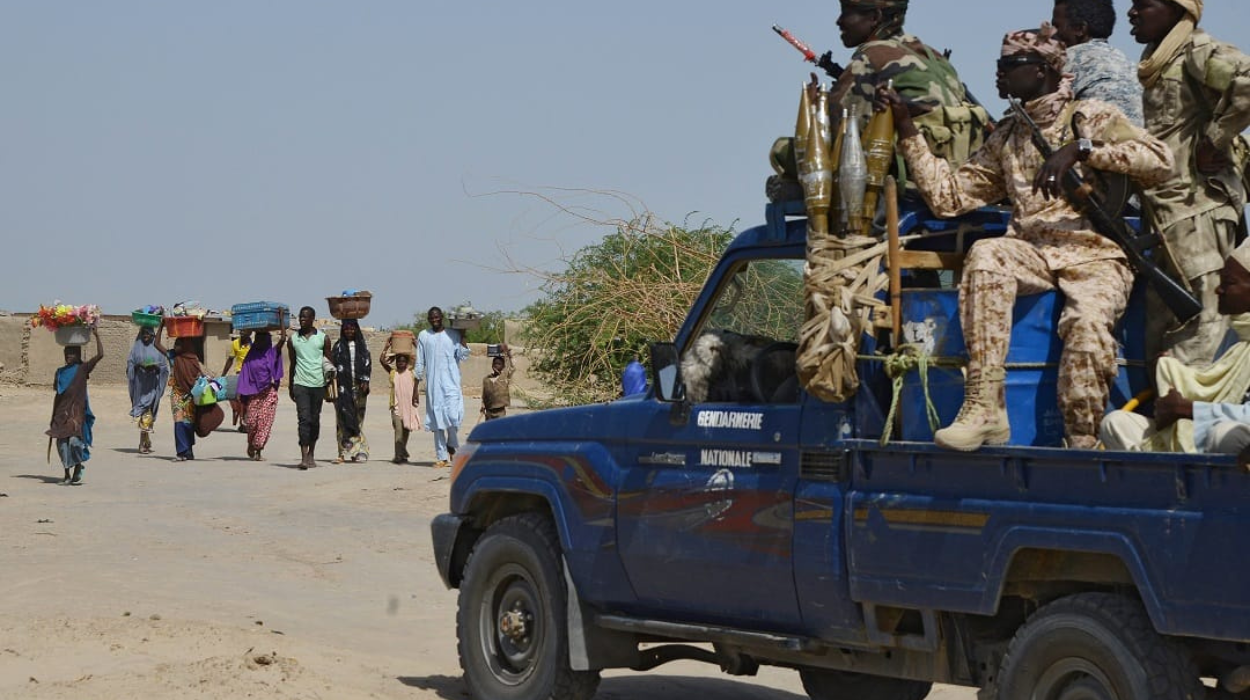
The recent foiled attack by Boko Haram militants on a naval base in the Lake Chad region, resulting in dozens of militant fatalities, underscores the persistent security challenges facing Nigeria and its neighbors. Despite sustained military efforts, Boko Haram and its splinter group, the Islamic State West Africa Province (ISWAP), continue to threaten regional stability, civilian safety, and economic livelihoods. This article provides a comprehensive analysis of the attack’s implications, the broader security environment in the Lake Chad basin, and the strategic policy responses required to address this protracted insurgency.
Contextualizing the Lake Chad Insurgency
Boko Haram emerged in the early 2000s as an Islamist militant group with the aim of establishing an Islamic state in northeastern Nigeria. Over the years, the group has evolved into a complex insurgency, marked by brutal attacks on civilians, military installations, and infrastructure. The conflict has spilled over into neighboring countries—Chad, Cameroon, and Niger—making the Lake Chad basin one of Africa’s most volatile regions.
The Nigerian military’s recent success in repelling the attack on the naval base is a tactical victory but does not signal a strategic end to the insurgency. The militants’ ability to launch such attacks reflects enduring operational capabilities and highlights the ongoing threat to regional security.
Military Successes and Limitations
The reported killing of dozens of Boko Haram fighters during the attack demonstrates the Nigerian military’s improved operational capacity. Enhanced intelligence, better coordination among security agencies, and increased use of technology have contributed to recent successes. However, these gains are fragile.
Military operations have often been reactive rather than proactive, focusing on counterattacks after militant incursions rather than disrupting Boko Haram’s networks and logistics comprehensively. The militants’ continued capacity to mount attacks on strategic military targets like naval bases indicates gaps in intelligence and perimeter security.
A seasoned security analyst notes,
“While tactical victories are important, the insurgency’s resilience stems from its ability to exploit local grievances, porous borders, and weak governance.”
This underscores the need for a holistic approach beyond military force.
The Strategic Importance of the Lake Chad Naval Base
The Lake Chad naval base serves as a critical node for regional security operations. Lake Chad itself is a vital resource for millions, supporting fishing, agriculture, and trade. Control over this area influences economic stability and humanitarian conditions.
Boko Haram’s targeting of the naval base is not random; it aims to disrupt security operations, intimidate local populations, and assert control over strategic waterways. The attack’s failure is a setback for the militants but also a reminder of their intent to challenge state authority in critical zones.
Humanitarian and Socioeconomic Impacts
The insurgency’s impact extends far beyond military confrontations. The Lake Chad basin is home to over 30 million people, many of whom depend on the lake’s resources for survival. Repeated attacks have displaced millions, destroyed livelihoods, and exacerbated food insecurity.
Fishermen and farmers face constant threats from militants, leading to economic paralysis in many communities. The destruction of infrastructure and restricted access to water and markets have compounded poverty and humanitarian needs.
A local community leader explained, “Every attack pushes us further into poverty and fear. Without security, we cannot rebuild our lives.” This statement highlights the intertwined nature of security and development challenges in the region.
Regional and Multinational Dimensions
The Lake Chad basin’s security challenges are inherently transnational. Boko Haram and ISWAP operate across borders, exploiting weak coordination among Nigeria, Chad, Cameroon, and Niger. While the Multinational Joint Task Force (MNJTF) has made strides in joint operations, persistent logistical, political, and operational challenges hamper effectiveness.
Border porosity allows militants to evade military pressure, regroup, and launch cross-border attacks. Moreover, differing national priorities and resource constraints limit the MNJTF’s capacity to sustain pressure on insurgents.
An expert on West African security policy observes, “Regional cooperation is essential but remains uneven. Strengthening intelligence sharing and joint patrols must be prioritized.”
Policy Implications and Recommendations
Strengthening Military and Security Capabilities
While the Nigerian military’s recent success is commendable, sustained investment in training, equipment, and intelligence capabilities is critical. Enhancing surveillance technologies, including drones and satellite imagery, can improve early warning and rapid response.
Security forces must also focus on community engagement to build trust and gather actionable intelligence. Winning hearts and minds is a crucial component of counterinsurgency.
Enhancing Regional Cooperation
The MNJTF and regional governments must deepen collaboration by harmonizing strategies, sharing intelligence in real-time, and conducting coordinated operations. Political will and adequate funding are prerequisites for effective regional security architecture. Cross-border security infrastructure, such as joint checkpoints and communication networks, should be expanded to limit militants’ mobility.
Addressing Root Causes
Military action alone cannot end the insurgency. Addressing underlying drivers—poverty, unemployment, marginalization, and weak governance—is essential. Development programs focused on education, economic empowerment, and infrastructure in affected communities can reduce the insurgents’ recruitment base. Humanitarian assistance must be scaled up to support displaced populations and restore livelihoods. International partners should increase funding and technical support for integrated security-development programs.
Promoting Good Governance and Rule of Law
Corruption, impunity, and poor governance have fueled grievances exploited by Boko Haram. Strengthening institutions, ensuring accountability, and protecting human rights are vital to restoring public confidence in the state.
Security forces must adhere to international humanitarian standards to avoid alienating communities and undermining legitimacy.
The foiled Boko Haram attack on the Lake Chad naval base is a stark reminder of the ongoing security challenges in the region. While military forces have demonstrated capacity to repel attacks, the insurgency’s persistence reflects deeper structural issues requiring comprehensive policy responses.
Impact Policy’s analysis emphasizes that defeating Boko Haram demands a multidimensional strategy—one that combines robust security measures with regional cooperation, development initiatives, and governance reforms. Only through such an integrated approach can lasting peace and stability be achieved in the Lake Chad basin and beyond.