

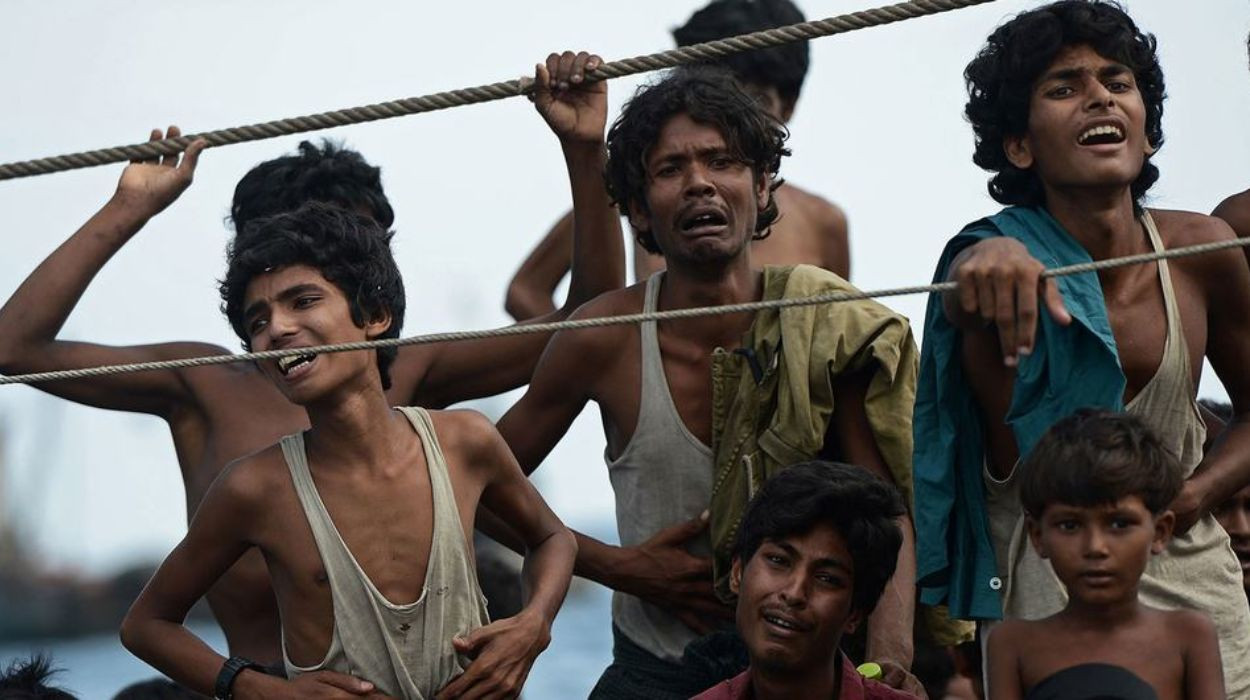
More than 500 Rohingya refugees are feared dead after two boats reportedly capsized in the Bay of Bengal near Myanmar, making this one of the most devastating sea tragedies involving the community in recent years. The incident once again highlights how the Rohingya crisis continues to drive people into dangerous maritime journeys where overcrowding, weak rescue access, and harsh conditions often turn survival into a matter of chance.
Boats Reportedly Left Rakhine State In Late June
Early reports suggest that the two boats departed from Myanmar’s Rakhine State in late June carrying mostly Rohingya passengers, including men, women, and children. One vessel was believed to have carried around 250 people and lost contact shortly after leaving, while another reportedly carrying about 280 people is thought to have sunk off Myanmar’s Ayeyarwady coast on July 8.
"While the incidents and casualty figures have yet to be officially confirmed, UNHCR and IOM are gravely concerned by the potentially devastating loss of life,"
the agencies said, reflecting the uncertainty and gravity surrounding the tragedy.
More Than 500 Feared Dead In Bay Of Bengal
The combined passenger estimates have led to fears that more than 500 people may have died at sea. That figure has turned this into a mass-casualty event in the making, even as officials continue to verify the details. For the Rohingya, such disasters are tragically familiar, because the sea route has long been used by desperate families fleeing persecution, statelessness, and life without safe protection.
Record Losses Show A Worsening Crisis
The latest tragedy fits into a much larger pattern of maritime deaths. In 2025, nearly 900 Rohingya were reported dead or missing at sea, making it the deadliest year on record for this route, while more than 6,500 attempted the crossing that year.
"This tragic incident reflects the dire consequences of protracted displacement and the absence of durable solutions for the Rohingya,"
UNHCR has said, underscoring how repeated loss of life is tied to unresolved displacement rather than isolated accidents.
Human Rights Failures Keep Driving The Exodus
This tragedy is deeply connected to long-running Human Rights abuses and the absence of meaningful protection for the Rohingya. Many families continue to flee because staying behind means enduring fear, insecurity, and marginalization, while the journey by sea offers no real safety either.
"This makes, sadly, the Andaman Sea and the Bay of Bengal an unmarked graveyard for thousands of desperate Rohingya refugees,"
UNHCR’s Babar Baloch said, a statement that captures how the route has become synonymous with loss.
State Policy Gaps Leave Refugees Vulnerable
The disaster also exposes serious gaps in State Policy across the region. When governments fail to provide safe legal pathways, reliable refugee protection, and durable solutions, desperate people are left with dangerous alternatives. That policy failure creates the conditions in which smugglers, overcrowded boats, and delayed rescue responses can repeatedly turn migration into catastrophe.
Why The Bay Of Bengal Remains So Dangerous
The Bay of Bengal and the Andaman Sea remain among the world’s most dangerous migration routes because the risks are constant and the support systems are weak. Boats are often overloaded, poorly equipped, and far from timely assistance, which means a single problem at sea can become fatal within hours. The latest reports also suggest that some passengers may have come from refugee camps in Bangladesh, showing how unresolved displacement continues to push people toward perilous journeys.
Another Warning For The International Community
This disaster should be seen as more than a maritime accident; it is another warning about the cost of inaction. As long as the Rohingya remain caught between persecution, displacement, and the absence of durable solutions, more families will keep risking the sea. The tragedy is a reminder that without stronger Human Rights protection and serious State Policy responses, the Bay of Bengal will continue to claim lives.